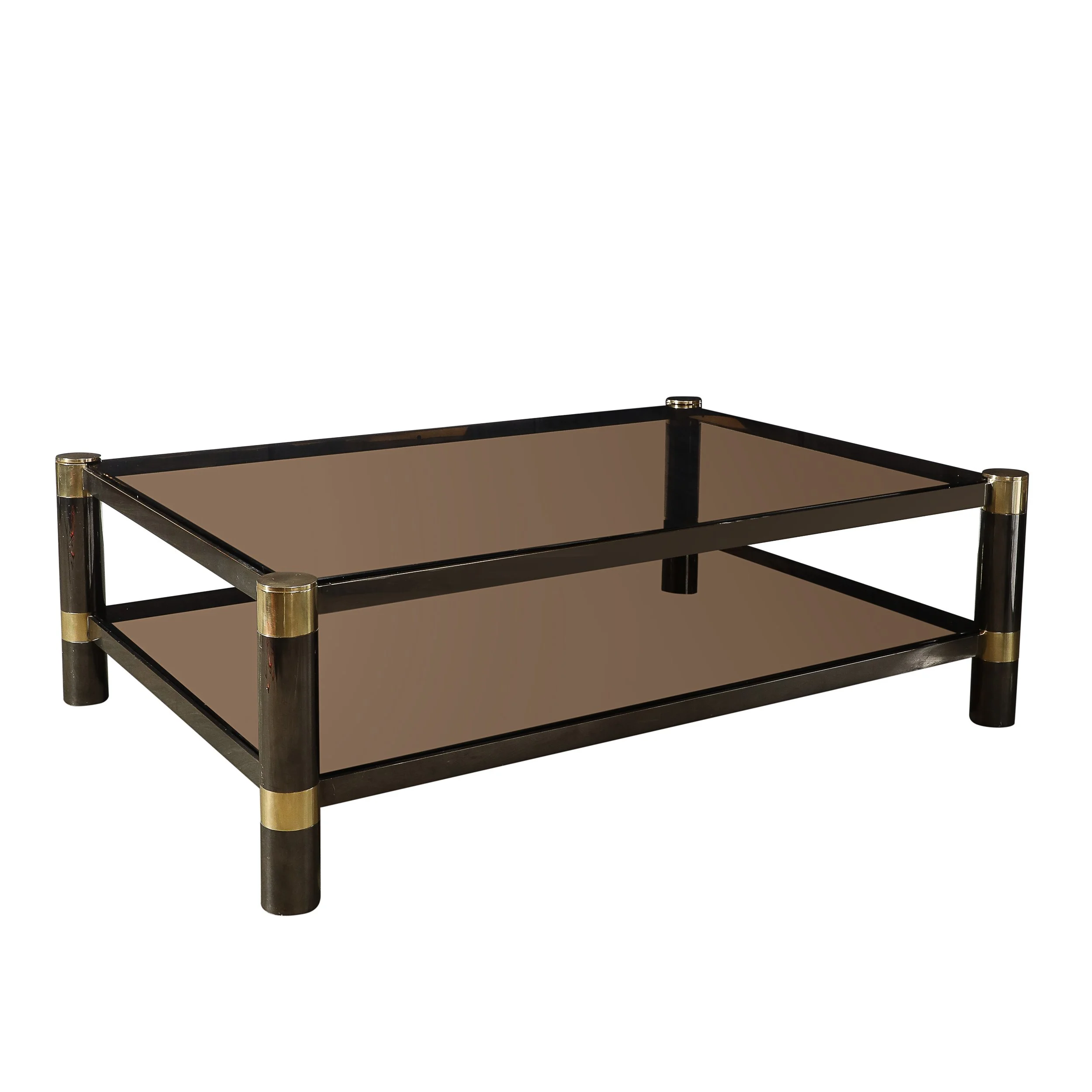
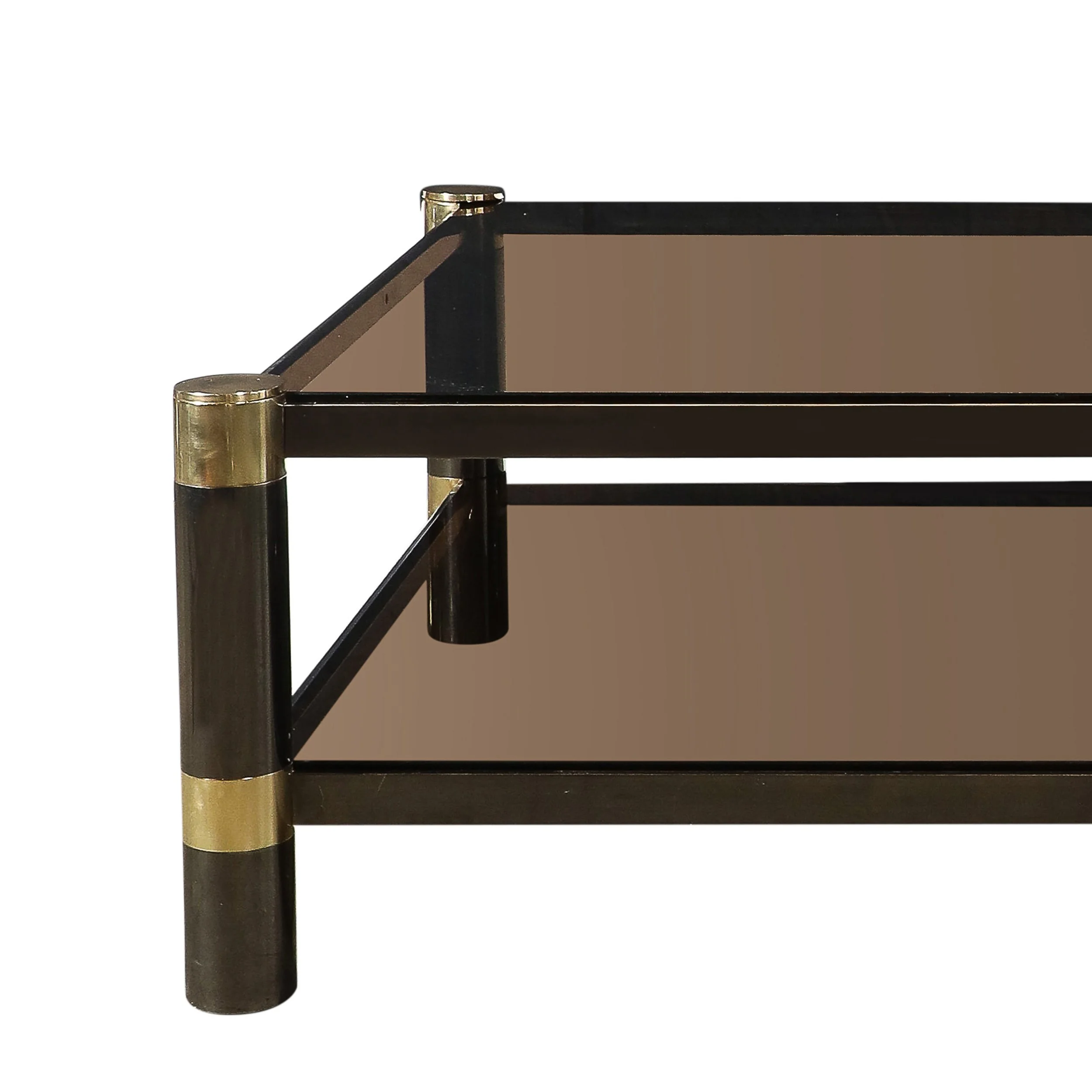
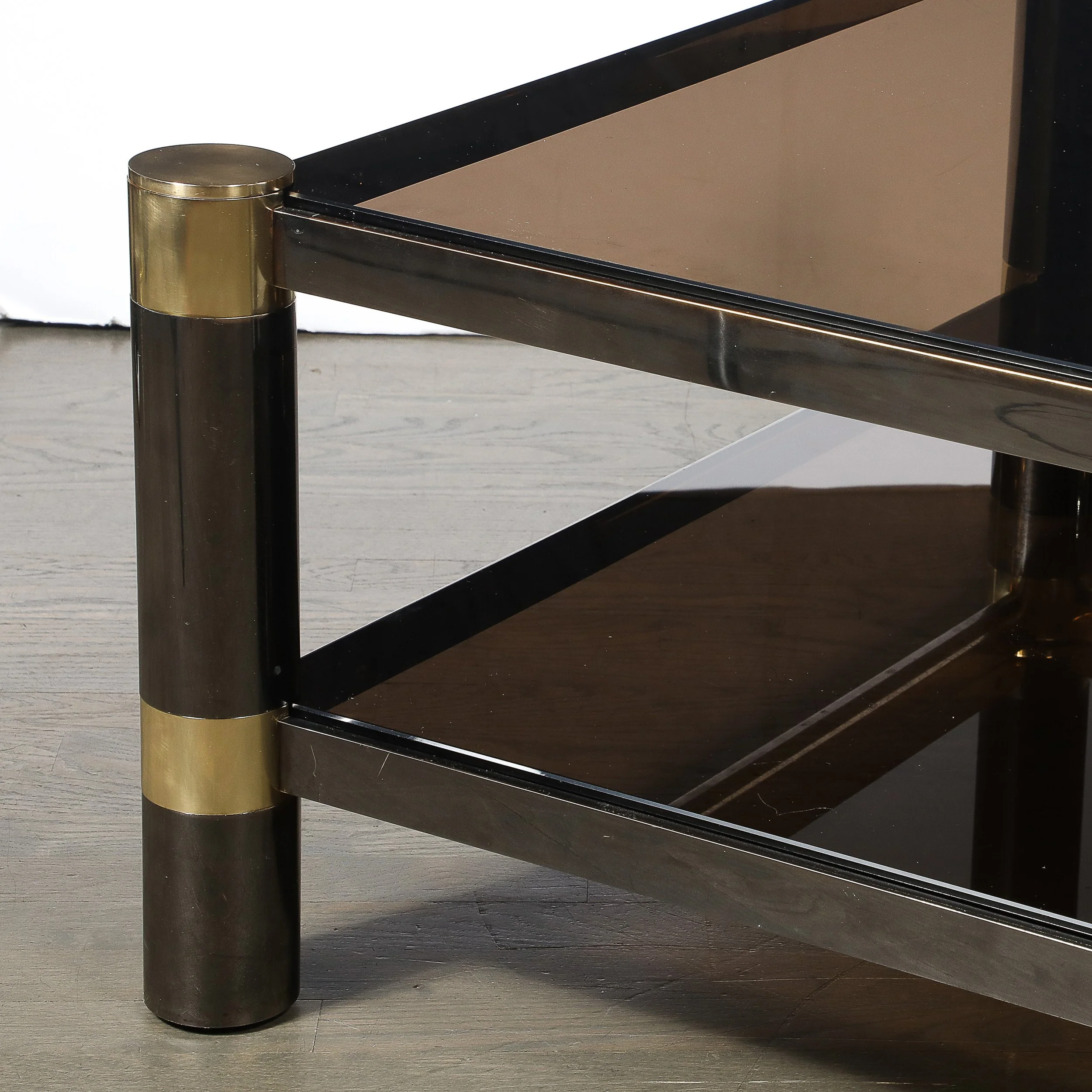
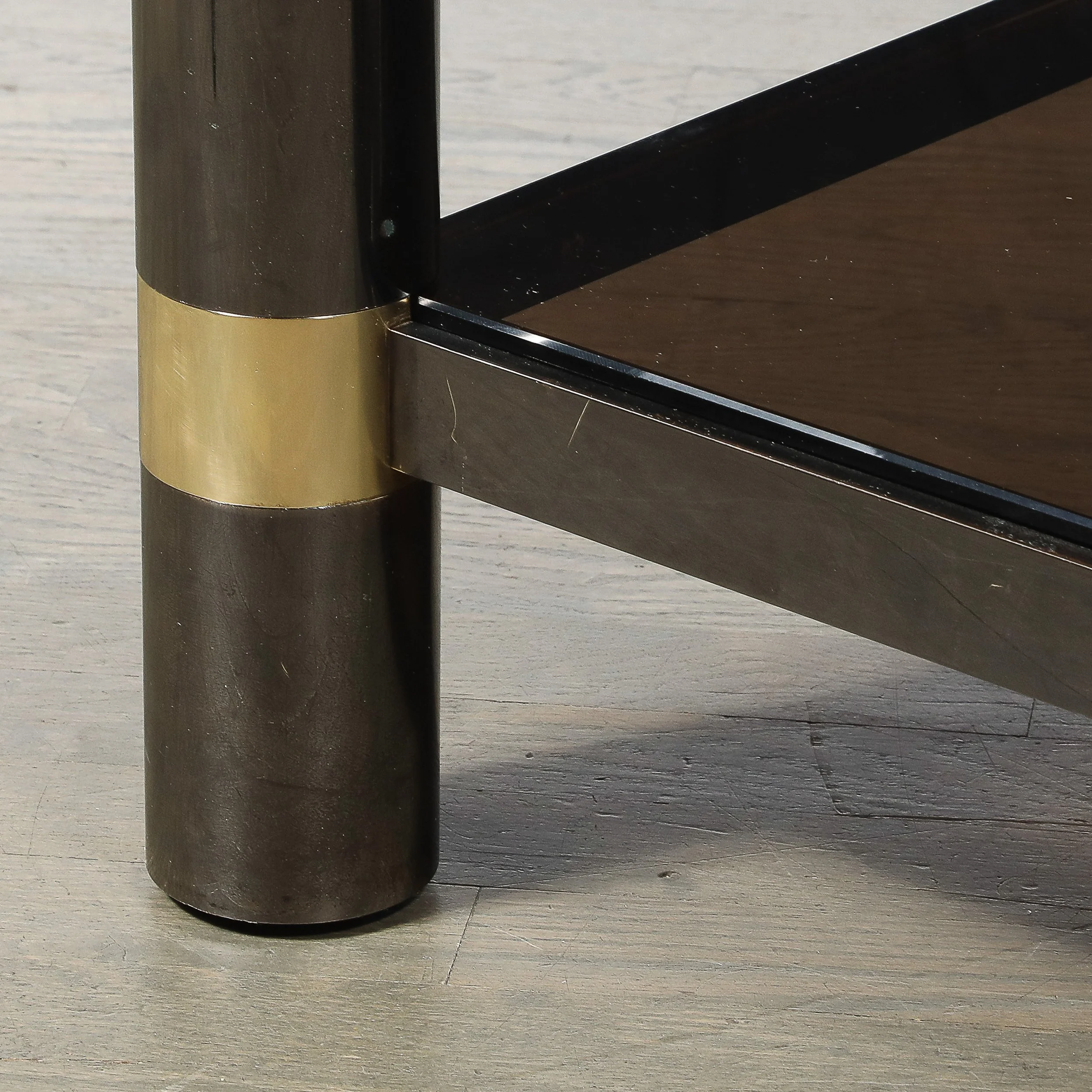
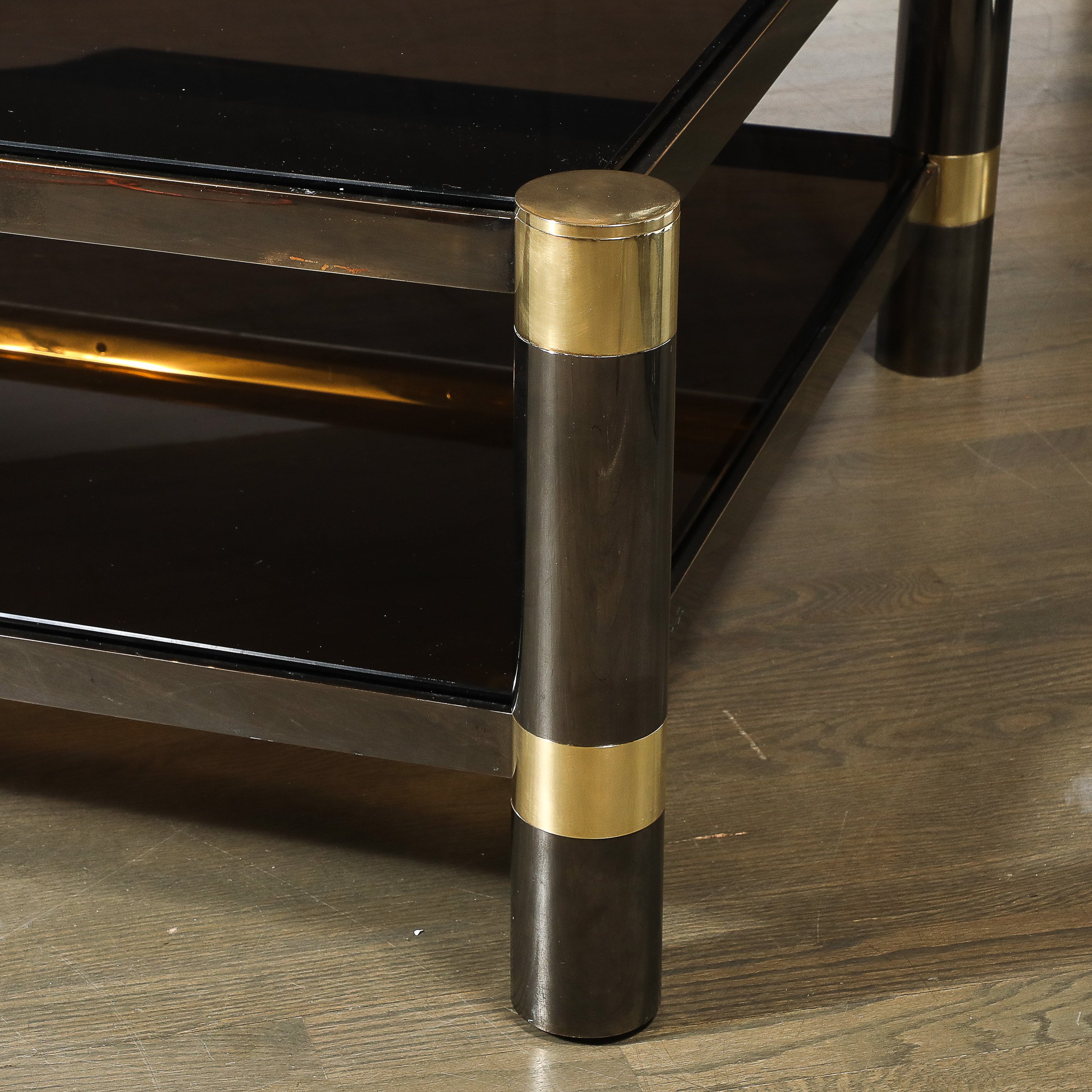
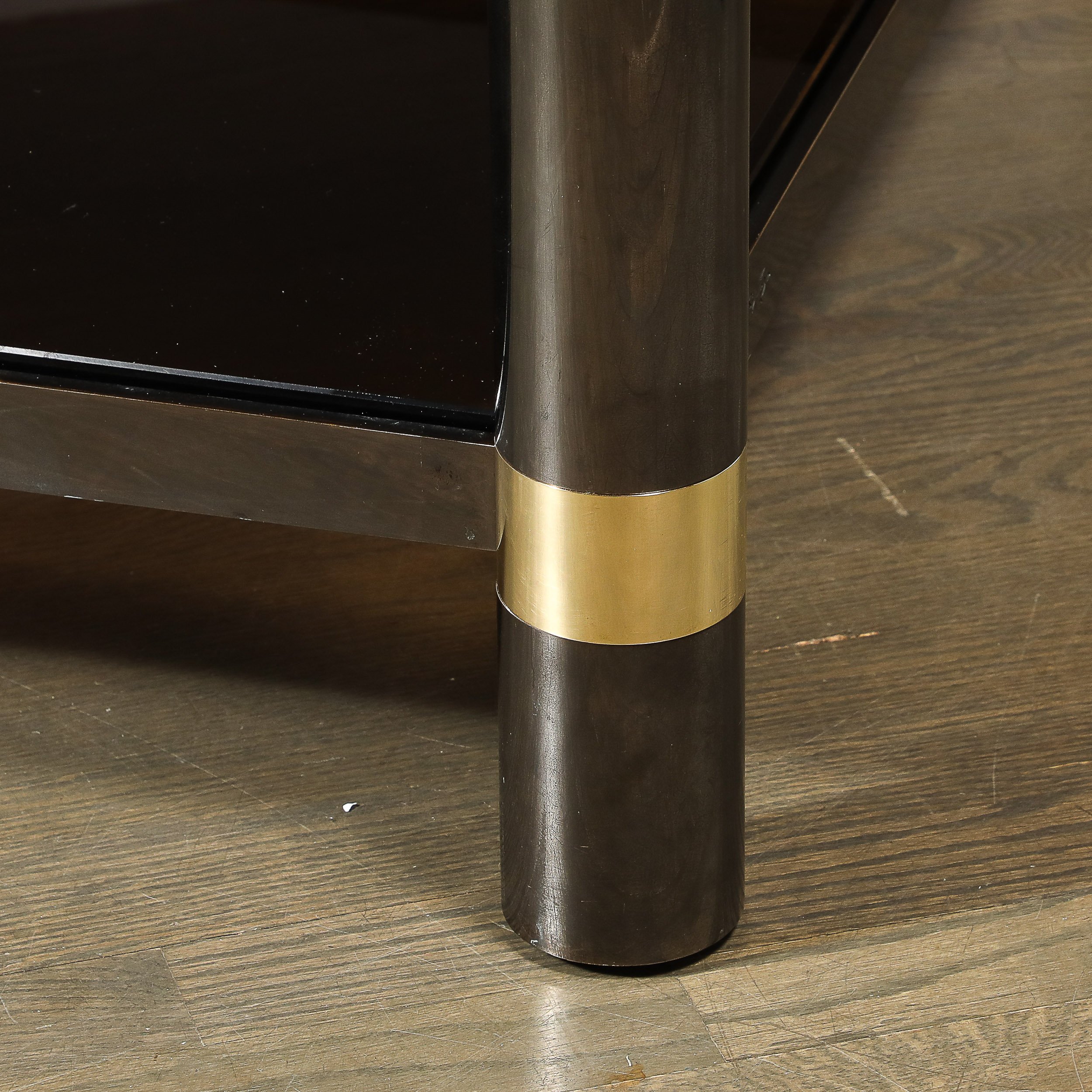
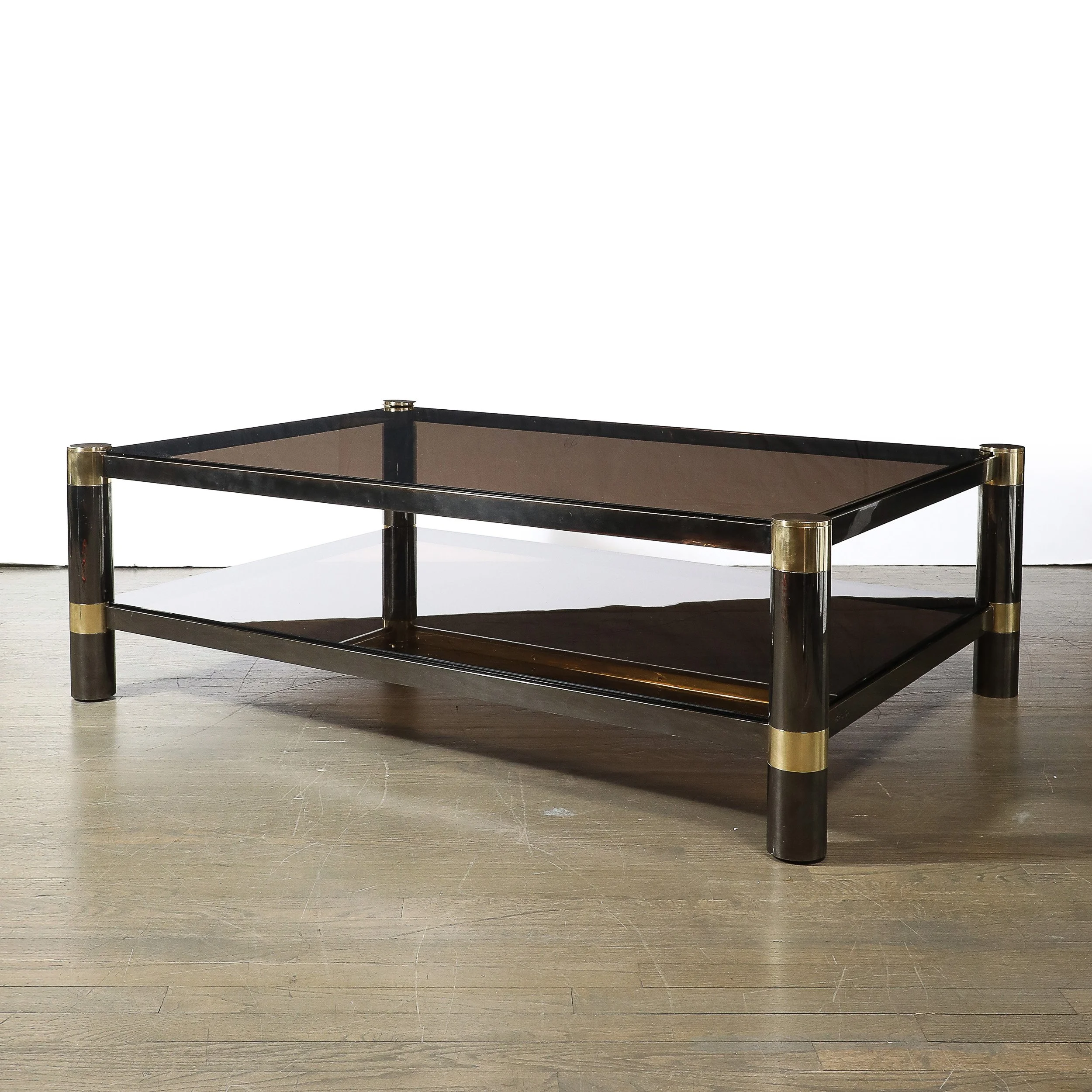
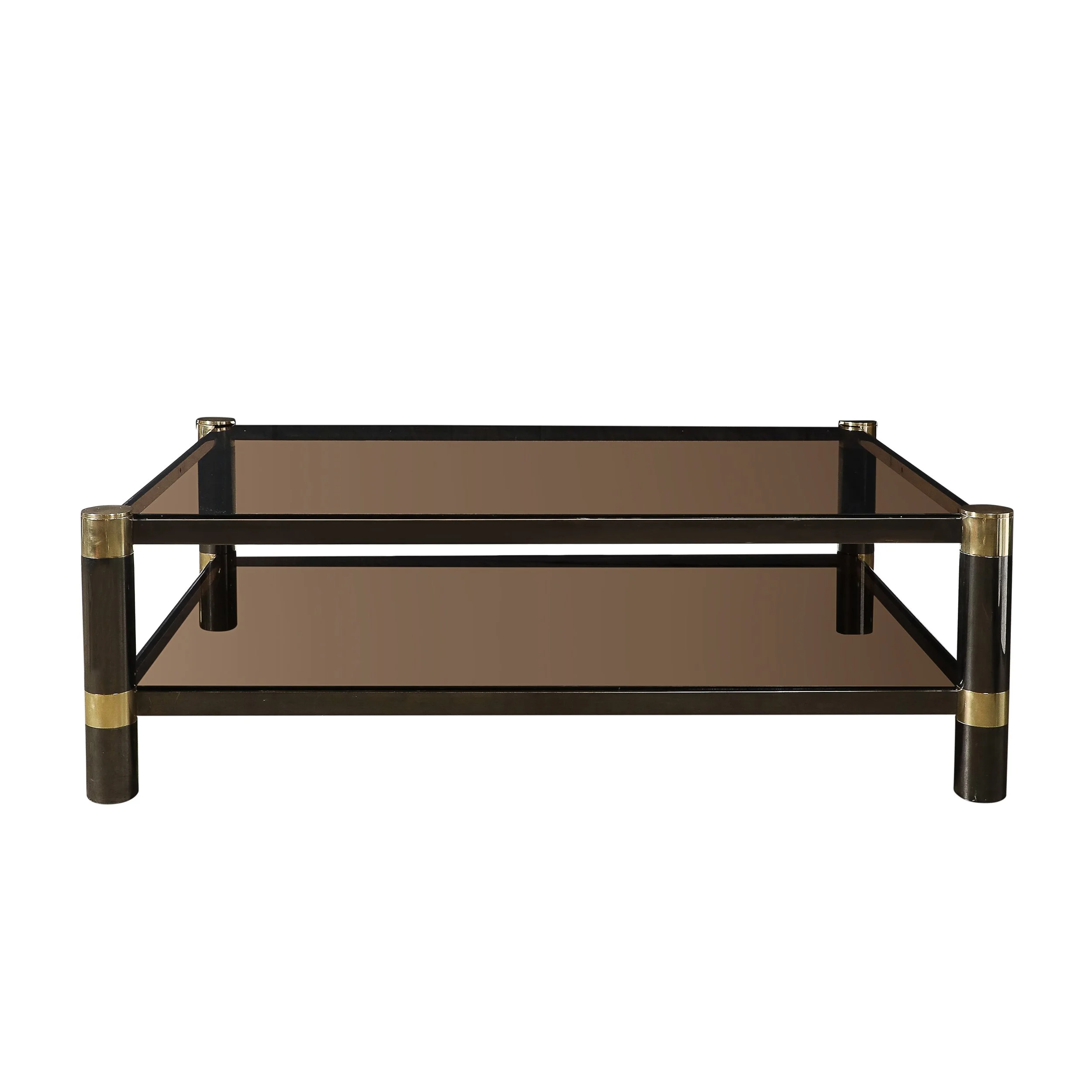
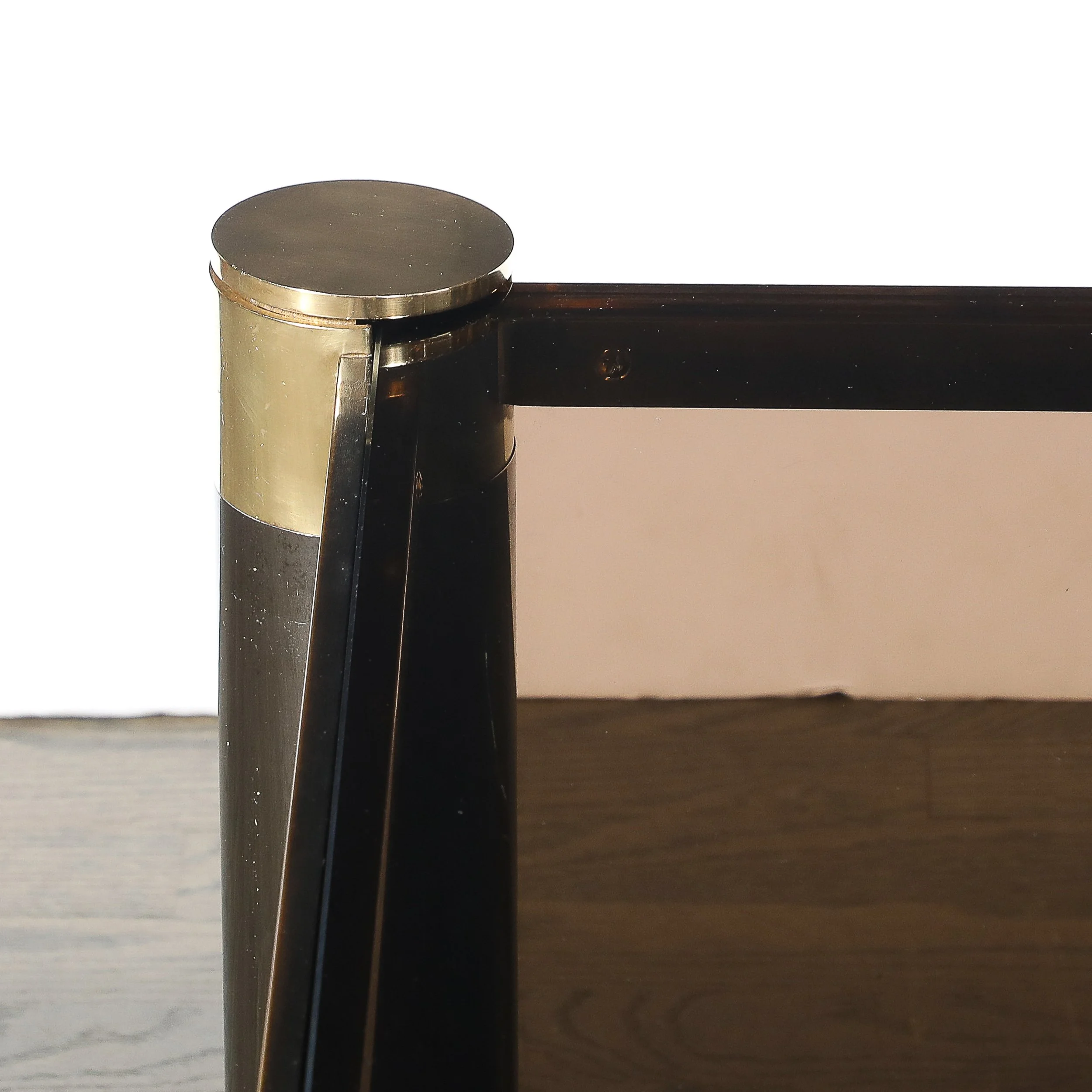
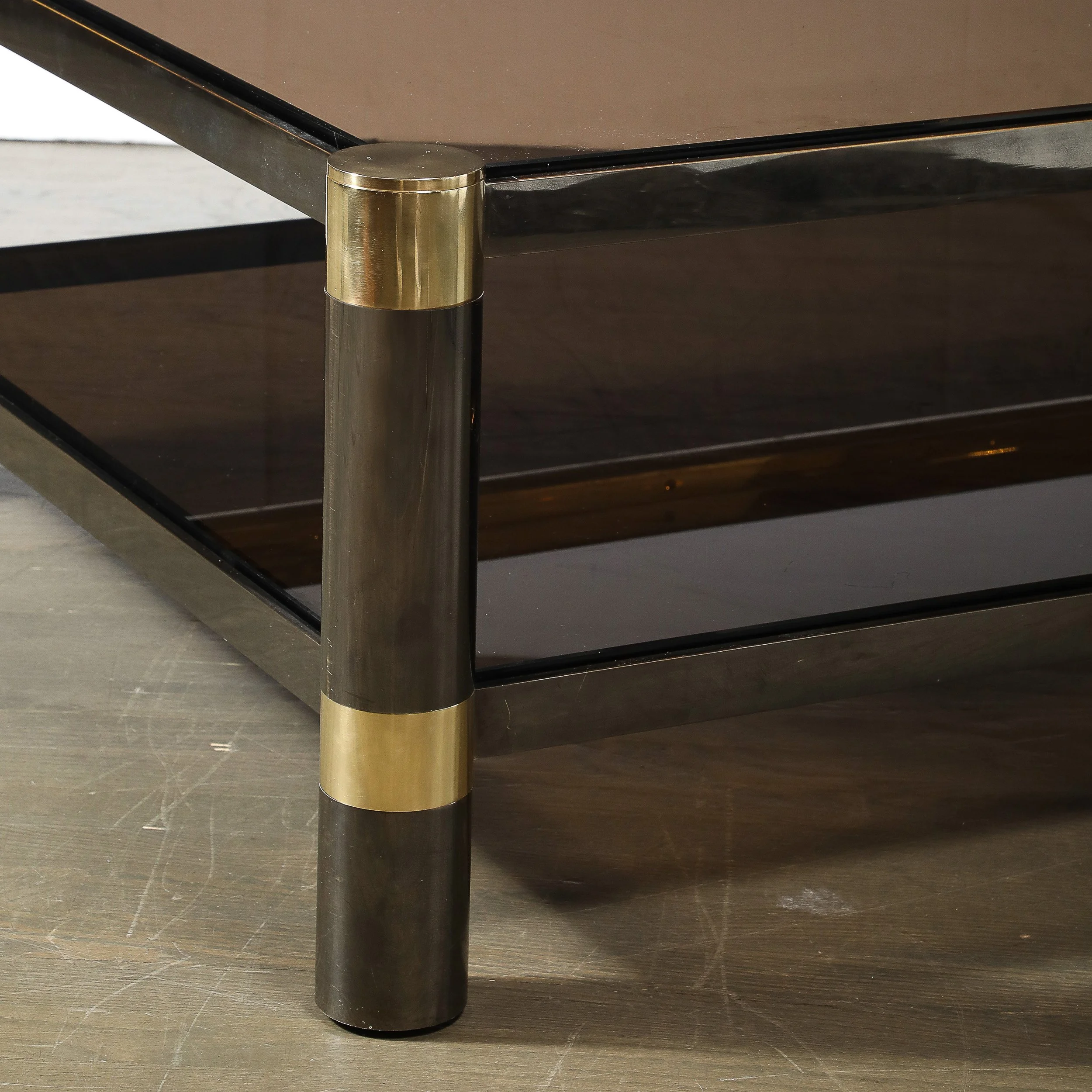
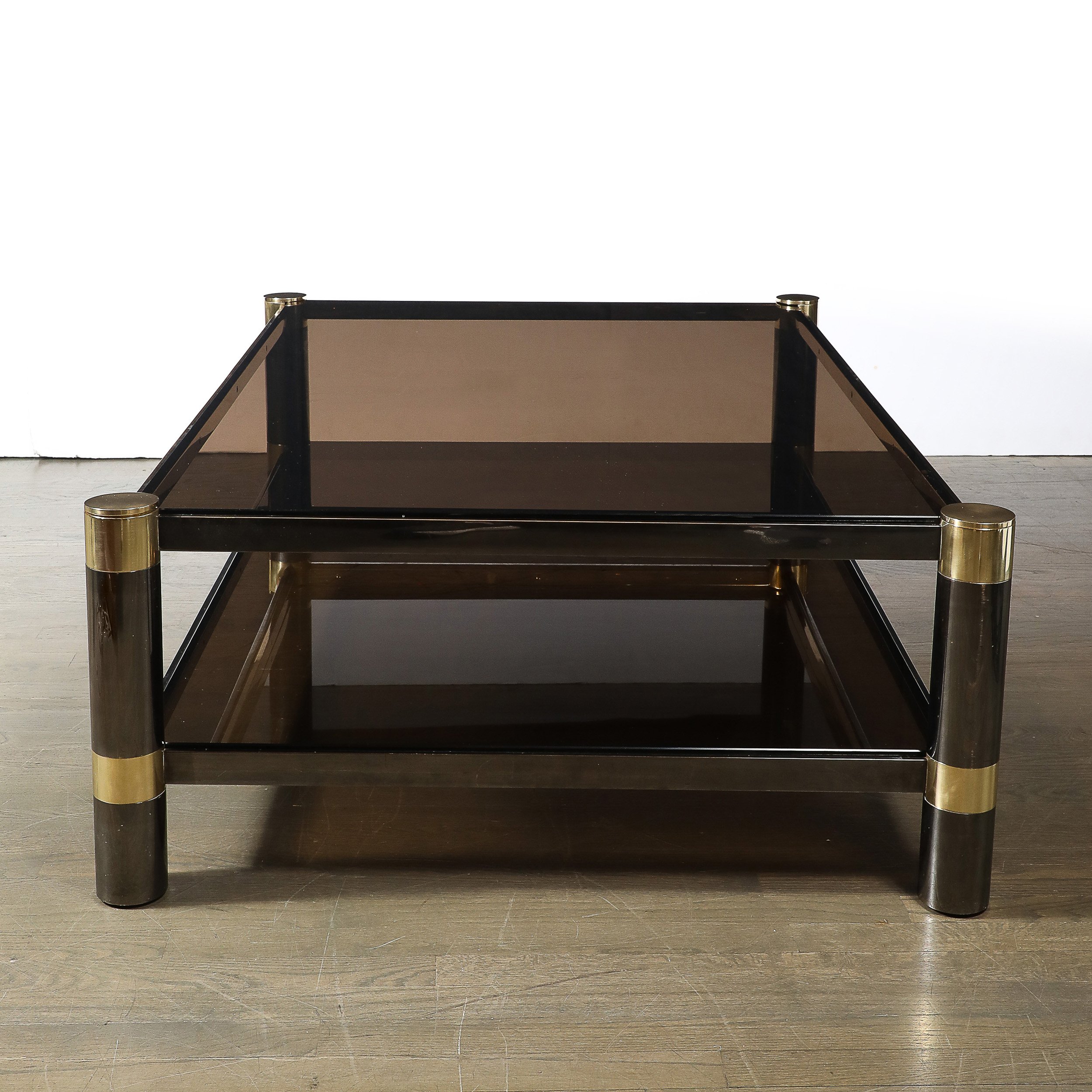
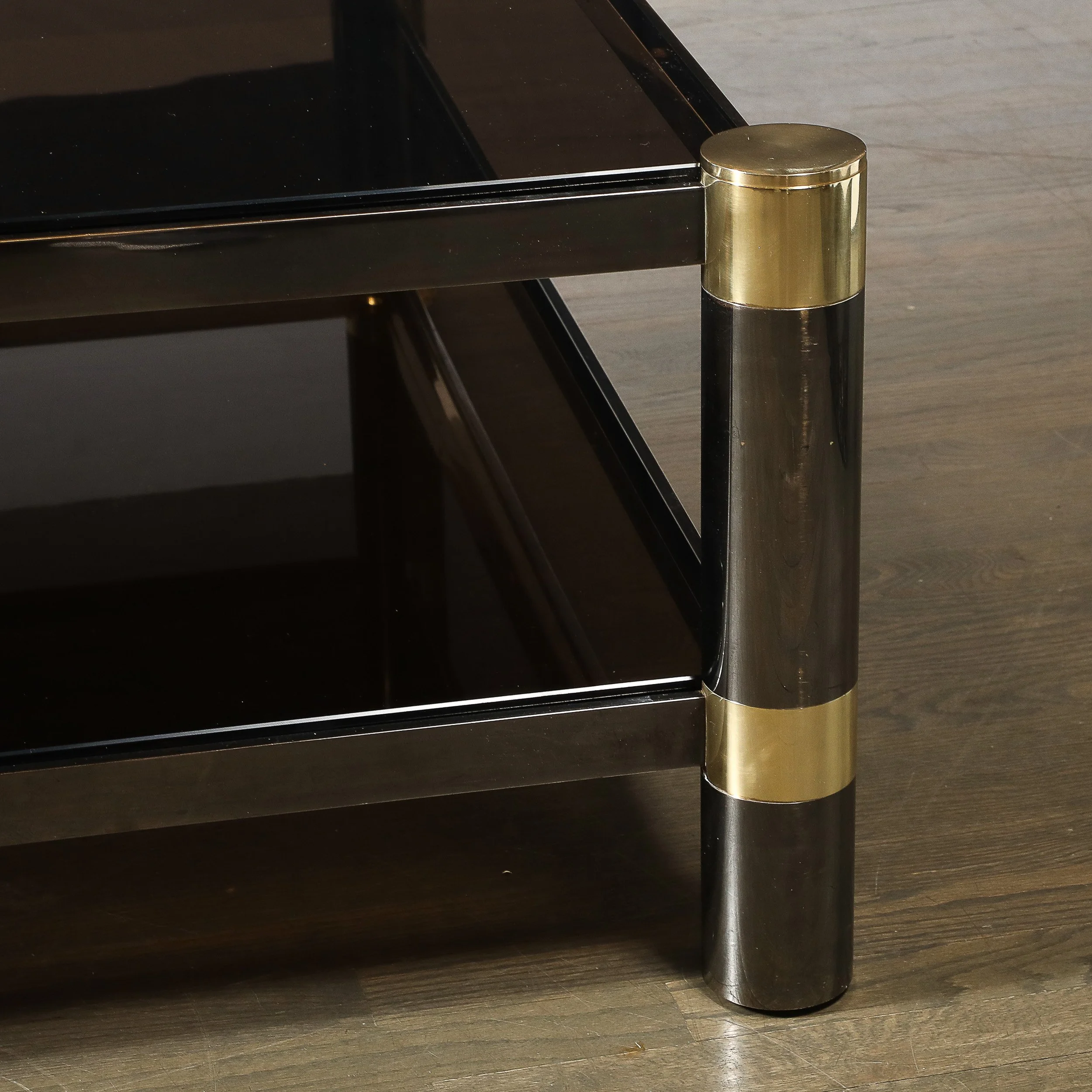
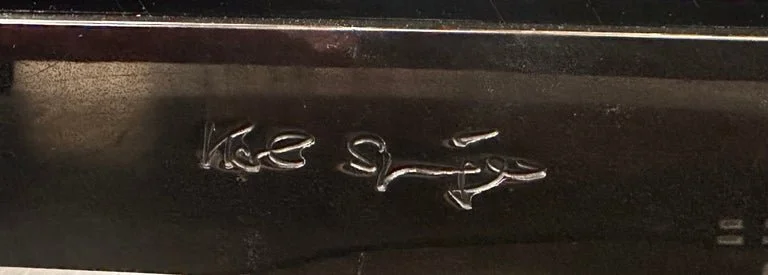
This elegant Mid-Century Lucite Bullet-Form Supports & Glass Coffee Table by Karl Springer originated in the United States, circa 1980. The design pairs a single rectangular glass top with four sculptural Lucite supports set at each corner, where the broad, low-slung plane of clear glass rests in shallow, precisely cut saddles at the upper face of each support and reads as nearly floating above the base. Each support is a substantial, vertically oriented solid Lucite form with an elongated ovoid profile and a flat recessed seat where the glass engages, creating crisp intersections of transparency and mass. The table's pared geometry and the high optical clarity of the Lucite emphasize light, reflection, and silhouette, giving the piece a strong presence while maintaining visual openness in interior settings. Polished edges on the glass and the smooth planes of the Lucite supports respond to shifting daylight and interior lighting, animating the piece without overwhelming adjacent furnishings. The simplicity of the rectangular glass combined with the tactile, rounded quality of the bullet supports exemplifies late 20th century modernist table design and lends the piece a restrained, sculptural character. The piece is in excellent vintage condition. Karl Springer (1931–1991) was a Berlin-born, New York–based designer and manufacturer of luxury furniture, lighting, and accessories. He immigrated to New York in 1957 intending to work from his bookbinding training; while employed at Lord & Taylor, he began making small leather- and skin-covered decorative objects that were later taken up by Bergdorf Goodman. He established a small workshop in the early 1960s and, by 1965, shifted his focus primarily to furniture; Karl Springer Ltd. later operated showrooms in New York, Los Angeles, and Tokyo, with additional outlets reported in Munich and Chicago. Springer’s design vocabulary is usually associated with simplified classical and Art Deco-derived forms, with cited influences including Ruhlmann, Jean-Michel Frank, Chinese furniture, Bauhaus, and African sources. His catalogue is especially important for materials: shagreen, lacquered parchment or vellum, exotic leathers and skins, Lucite/acrylic, inlaid veneers, rare woods, metals, granite, faux finishes, and Venetian glass are all documented in accounts of his work.
United States, circa 1980
Dimensions:
Height: 18 in (45.72 cm) x Width: 56 in (142.24 cm) x Depth: 36.5 in (92.71 cm)
Style: Mid-Century Modern (Of the Period)
Materials and Techniques: Glass, Lucite
Place of Origin: United States
Period: 1980-1989
Date of Manufacture: circa 1980
Condition: Excellent
Reference Number: LU793452624872
TEAR SHEET

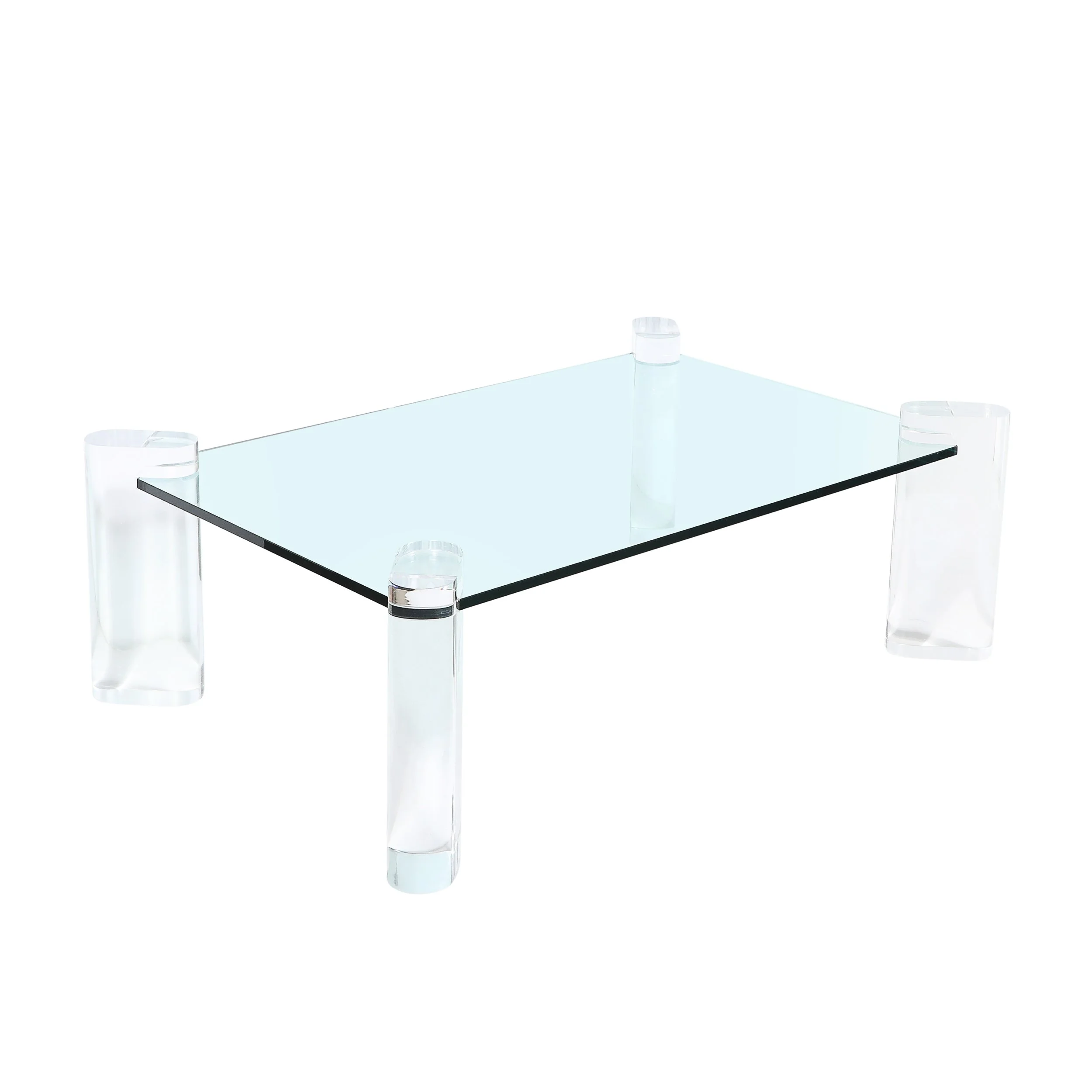 Image 1 of 10
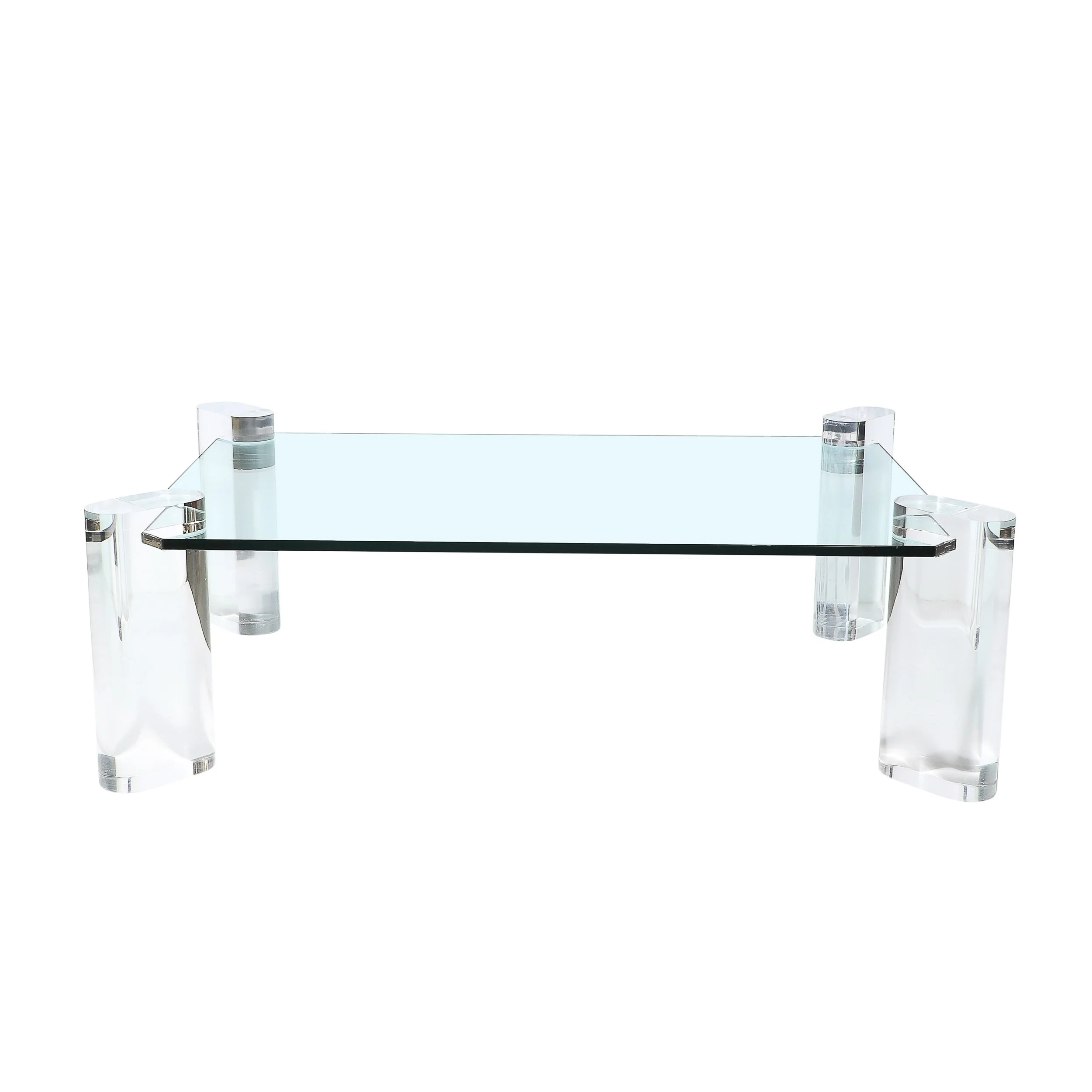 Image 2 of 10
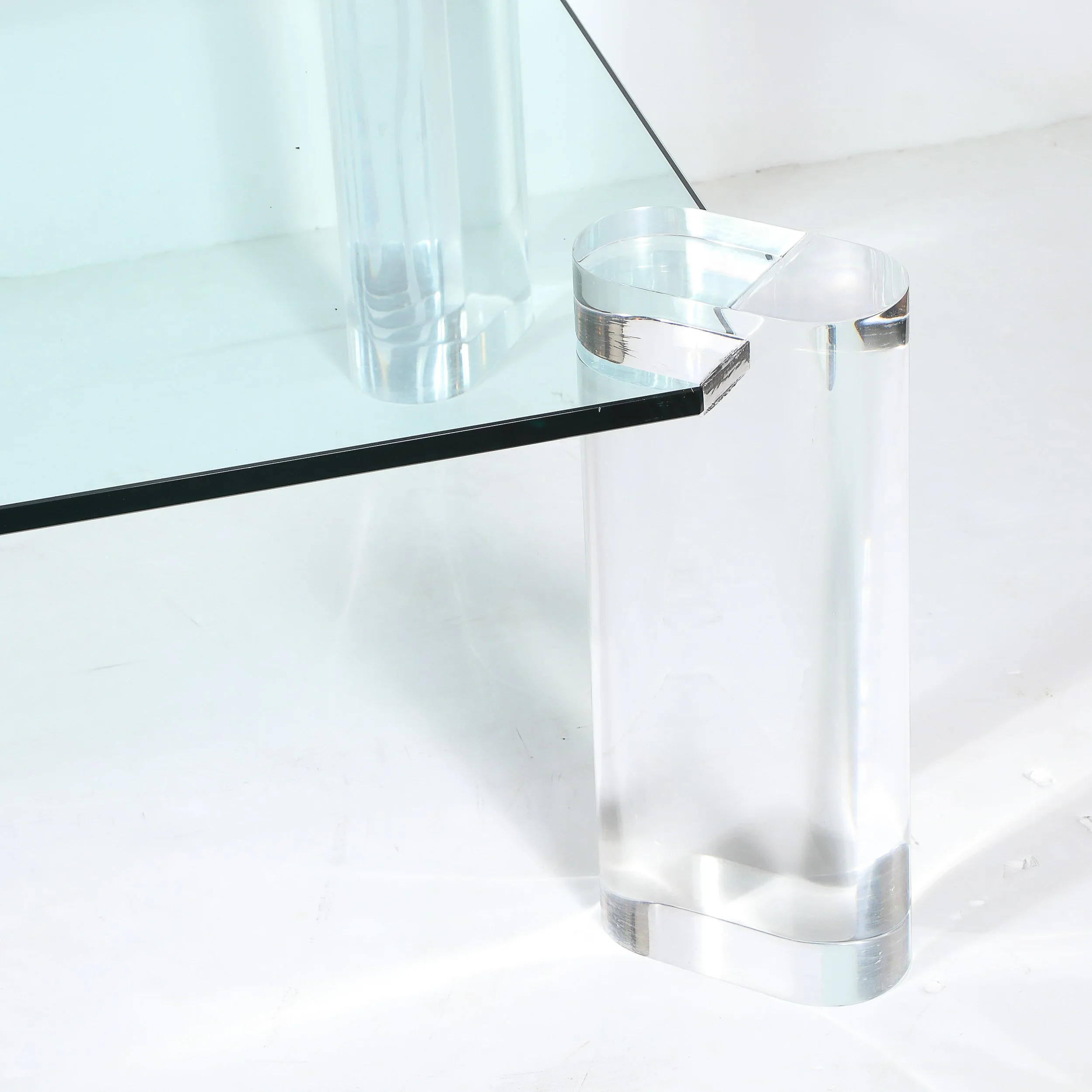 Image 3 of 10
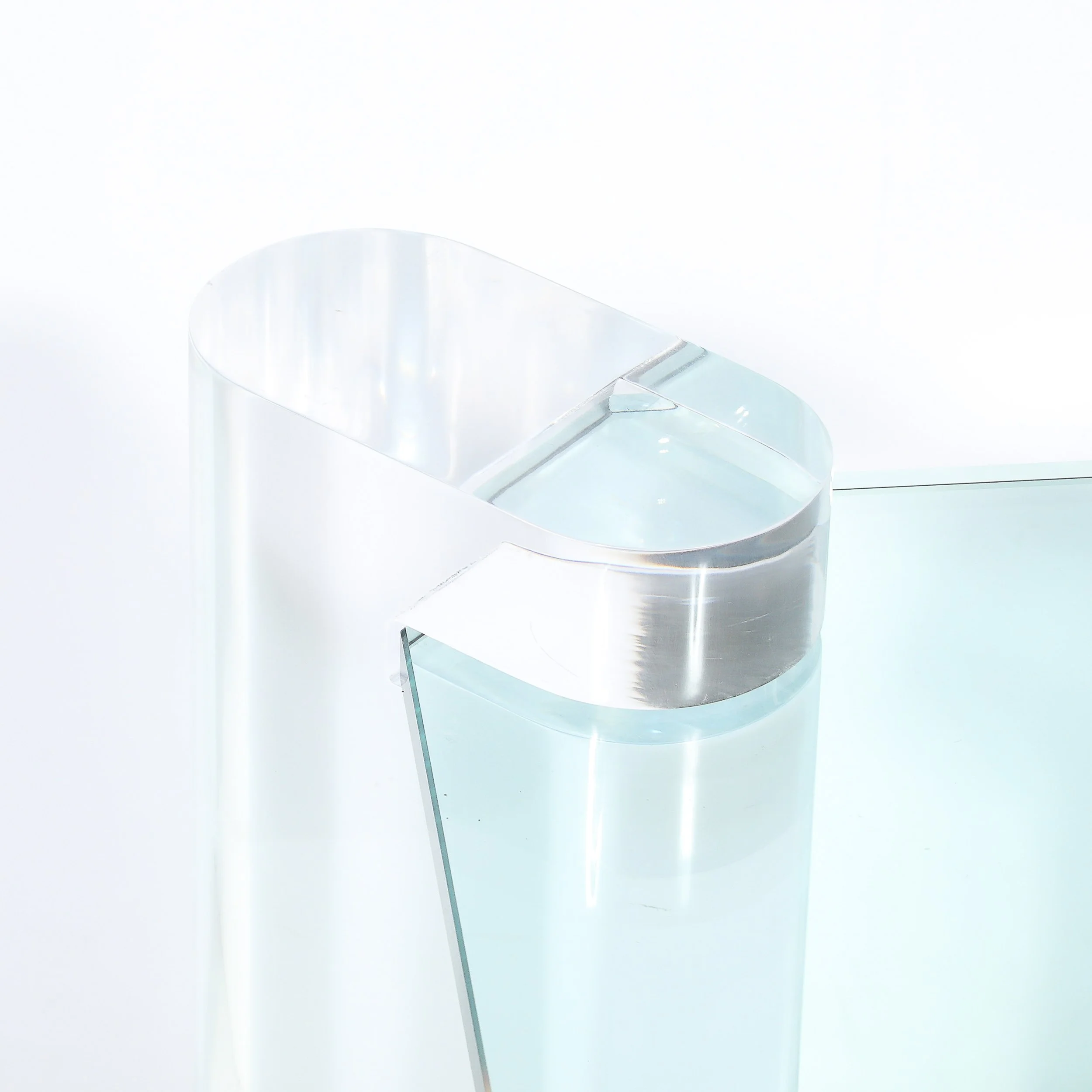 Image 4 of 10
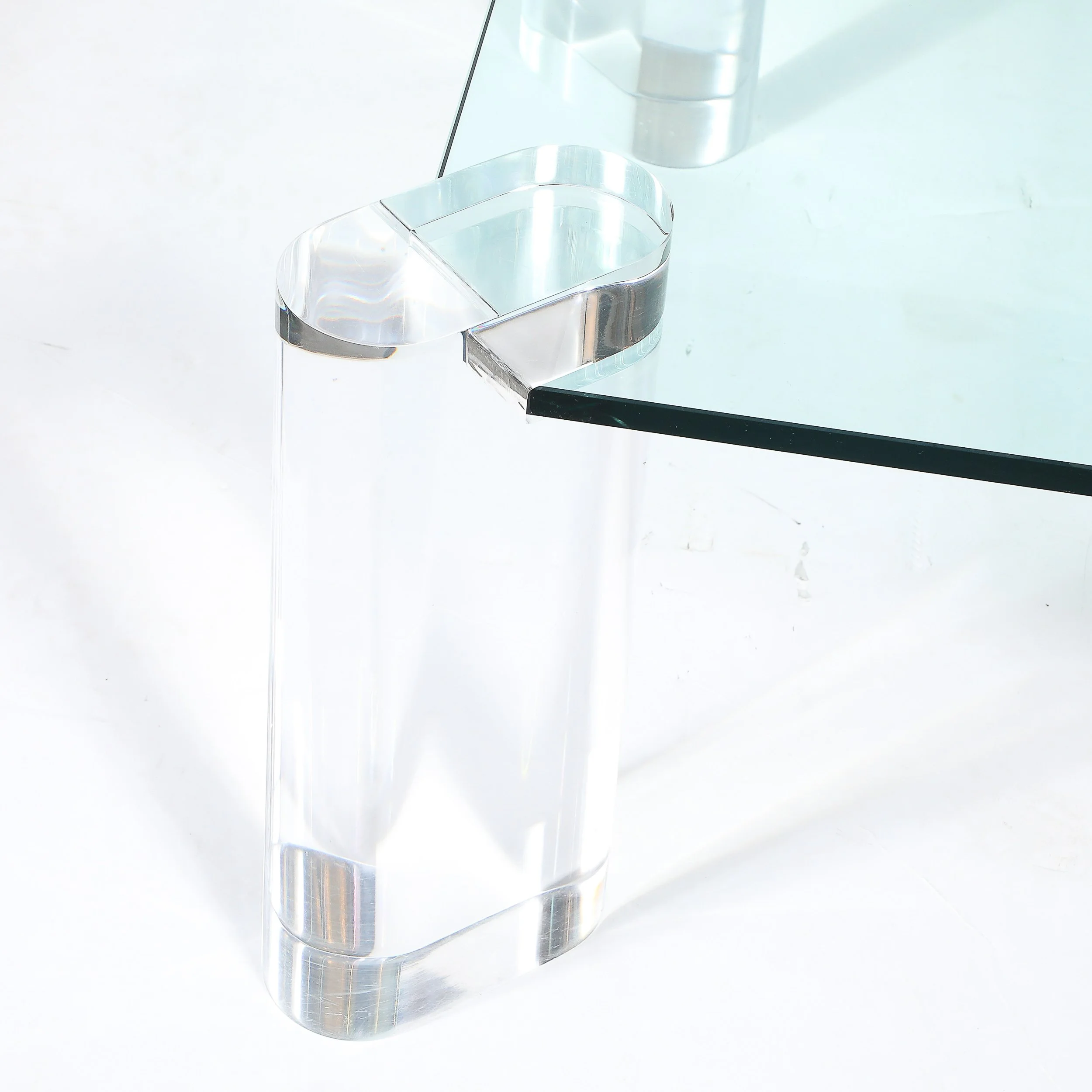 Image 5 of 10
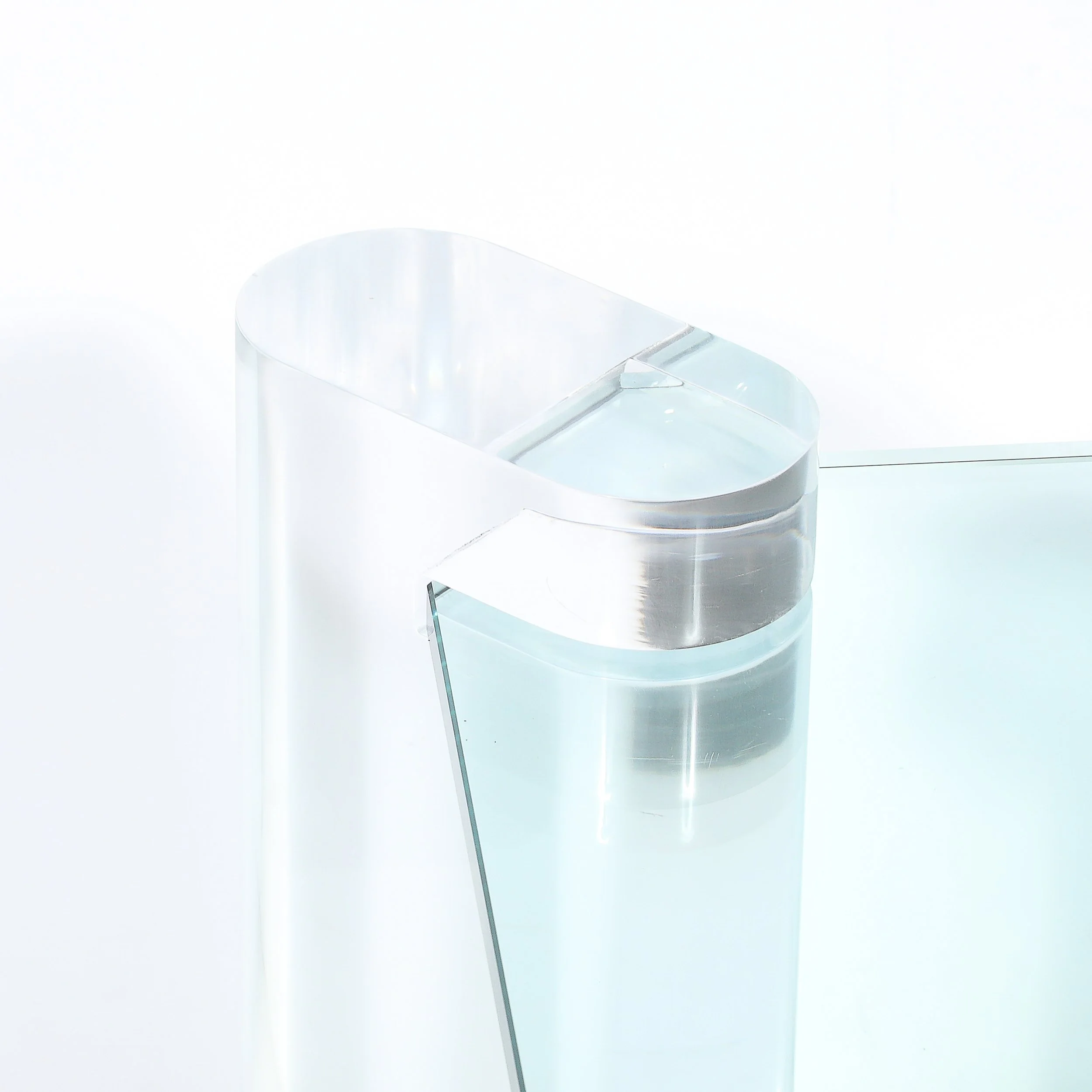 Image 6 of 10
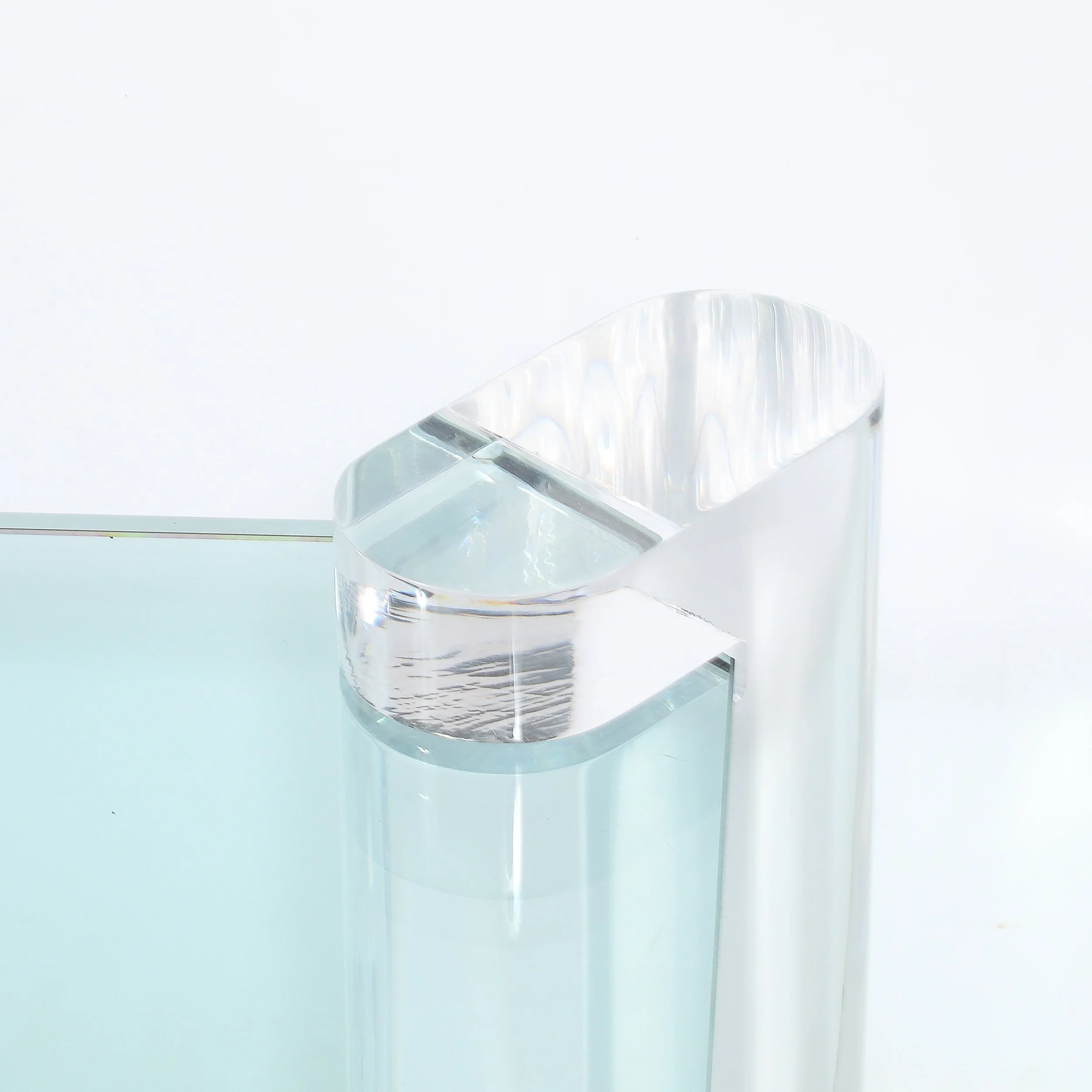 Image 7 of 10
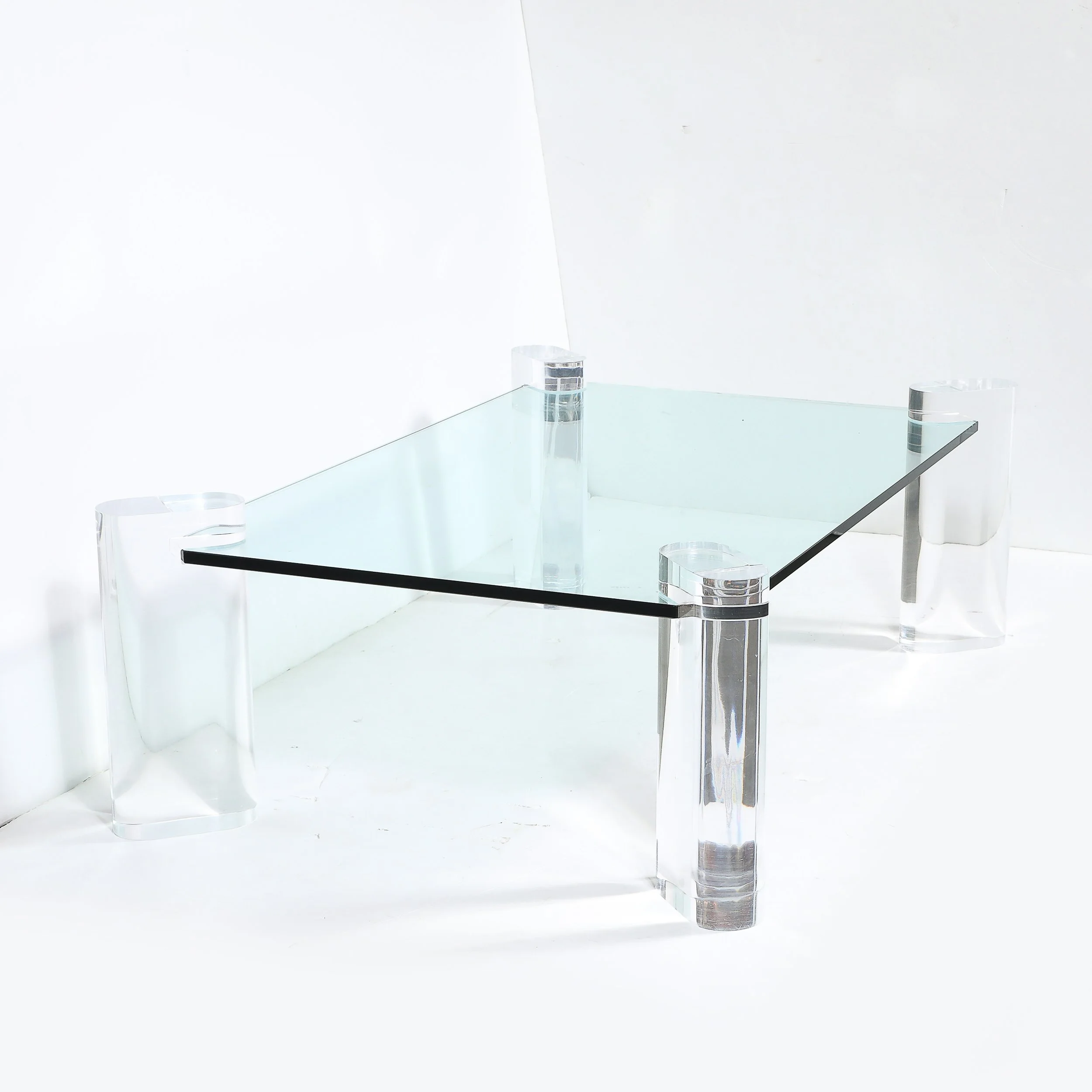 Image 8 of 10
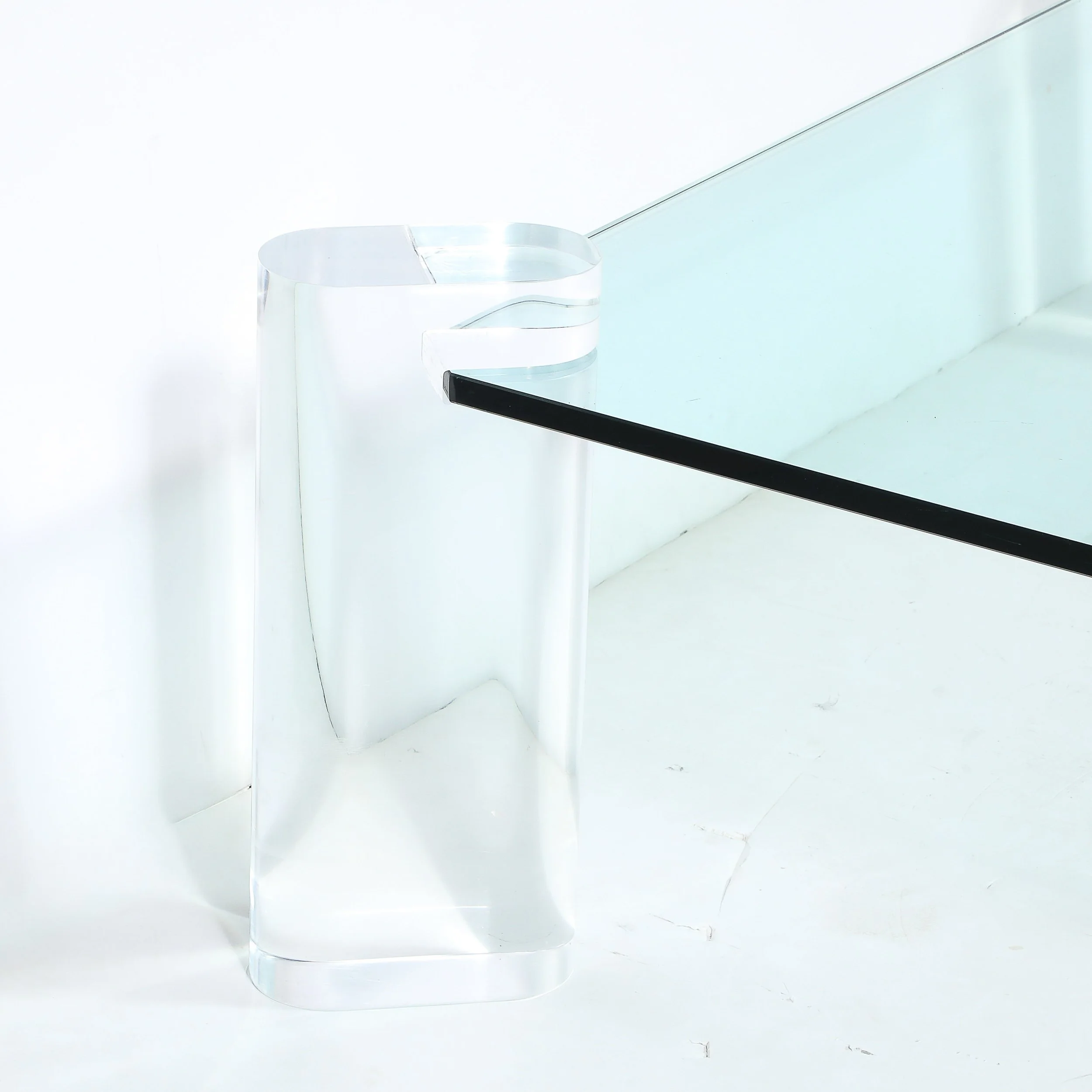 Image 9 of 10
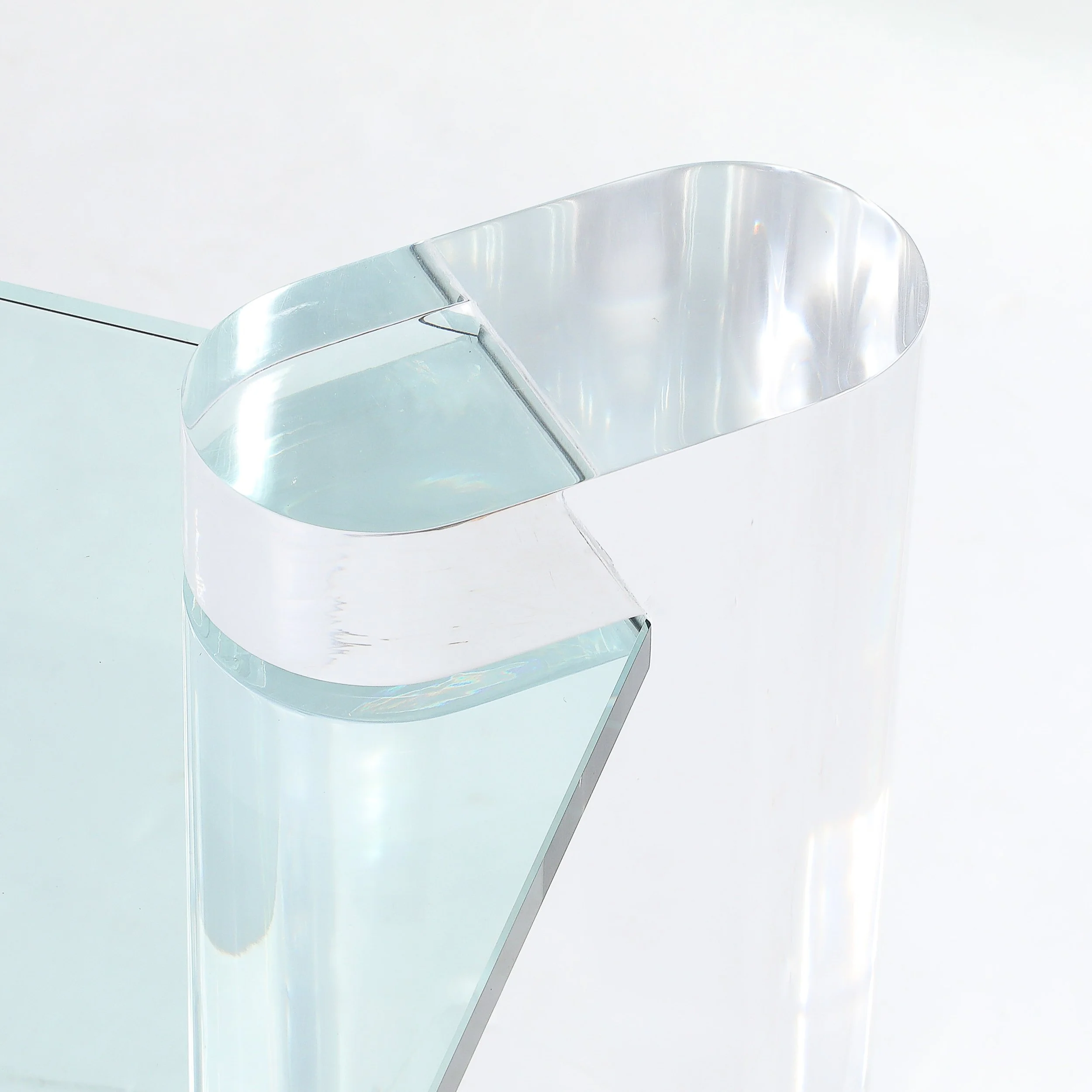 Image 10 of 10